Refractory Cement: Varieties and Properties
2024-12-09
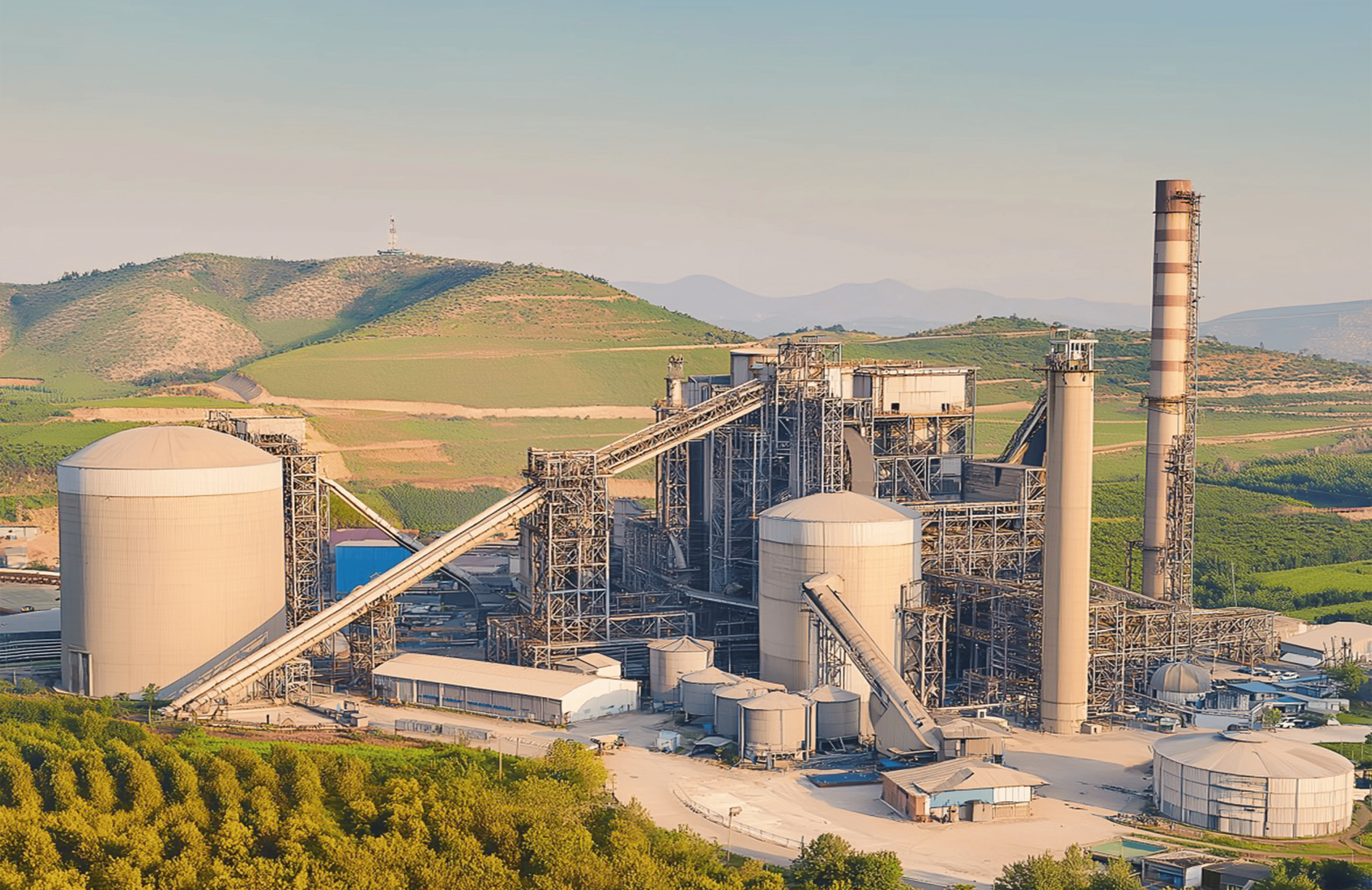 Refractory cement, also known as high-temperature cement, is a commonly used refractory material. It can maintain its performance under high-temperature conditions for an extended period and does not lose its strength and hardness due to continuous heat exposure. Composed mainly of materials like alumina and silicate, it exhibits high strength, excellent wear resistance, remarkable refractoriness, and strong resistance to chemical corrosion.
This type of cement finds extensive application in continuous high-temperature industries such as iron and steel smelting, glass manufacturing, cement production, and furnace construction. In these sectors, it is widely utilized because it can endure the harsh working environments of continuous high temperature, high pressure, and chemical corrosion. Moreover, refractory cement is also commonly employed in the construction field, including high-rise buildings, tunnel projects, and bridge construction, to enhance the fire resistance and safety of structures.
Categories of Refractory Cement
Based on different compositions, refractory cement can be classified into several types:
1.Aluminate Refractory Cement: Typically, it is produced by mixing and grinding 4 parts (by mass) of low-calcium aluminate refractory cement clinker with 1 part of high-alumina cement clinker. Compared to low-calcium aluminate refractory cement, it has a relatively higher early strength, similar refractoriness, and comparable applications.
2.Low-Calcium Aluminate Refractory Cement: This is an aluminate cement prepared by proportionally combining high-quality bauxite and limestone, followed by sintering and grinding. Its composition usually consists of approximately 70% oxygen, 19% - 23% calcium oxide, less than 4% silicon dioxide, and less than 1.5% iron oxide. The main mineral component is monocalcium dialuminate, accounting for 60% - 70%, and its refractoriness exceeds 1650°C. In contrast to high-alumina cement, it has a higher alumina content, lower calcium oxide content, lower early strength, and higher refractoriness. It can be mixed with refractory aggregates (such as calcined bauxite or high-alumina brick fragments) with a refractoriness above 1770°C to form refractory concrete or mortar used for the lining of cement rotary kilns and other industrial kilns.
3.Calcium-Magnesium Aluminate Cement: This cement is mainly produced by appropriately combining high-quality bauxite and dolomite, followed by sintering and grinding. Its composition generally includes 66% - 74% alumina, 13% - 18% calcium oxide, 10% - 13% magnesium oxide, with trace amounts of silicon dioxide and iron oxide. The main mineral components are calcium aluminate and dicalcium aluminate, accounting for 45% - 60%, and spinel accounting for 35% - 50%. Its refractoriness is also above 1650°C.
Application of Refractory Cement
When using refractory cement, the ratio of refractory cement to sand is approximately 30%. The usage method is relatively straightforward. First, prepare an appropriate amount of refractory cement, then add a suitable quantity of water and mix them thoroughly. There is no need to add additional binders during the addition process. Additionally, a small amount of powder or refractory aggregate can be incorporated to prevent cracking in the future. Although refractory cement alone has flame-retardant properties, it is prone to cracking after high-temperature calcination. Refractory cement can be used to bond various refractory aggregates to produce refractory mortar or concrete, which is commonly used for the lining of cement rotary kilns and other industrial kilns.
Technical Specifications of Refractory Cement
1.Fineness Requirement: There is a relatively high demand for fineness. The finer the cement particles, the more complete the hydration reaction will be, resulting in higher initial and final strengths. According to national regulations, the specific surface area should exceed 300㎡/kg to meet the standard.
2.Setting Time: The initial setting time of the cement should not be too short, preferably not earlier than 45 minutes, to ensure sufficient time for mixing and transportation during the construction process. The final setting time should not be too long, ideally not later than 390 minutes, as the cement needs to harden quickly after the operation is completed to ensure strength.
3.Volume Stability: During the solidification and hardening process, the more uniform the volume change of the cement, the higher its volume stability. If the volume stability of the cement is low, warping and cracking may occur, affecting the quality of the project and, in severe cases, potentially leading to accidents. Therefore, great attention must be paid to this aspect.
Refractory cement, also known as high-temperature cement, is a commonly used refractory material. It can maintain its performance under high-temperature conditions for an extended period and does not lose its strength and hardness due to continuous heat exposure. Composed mainly of materials like alumina and silicate, it exhibits high strength, excellent wear resistance, remarkable refractoriness, and strong resistance to chemical corrosion.
This type of cement finds extensive application in continuous high-temperature industries such as iron and steel smelting, glass manufacturing, cement production, and furnace construction. In these sectors, it is widely utilized because it can endure the harsh working environments of continuous high temperature, high pressure, and chemical corrosion. Moreover, refractory cement is also commonly employed in the construction field, including high-rise buildings, tunnel projects, and bridge construction, to enhance the fire resistance and safety of structures.
Categories of Refractory Cement
Based on different compositions, refractory cement can be classified into several types:
1.Aluminate Refractory Cement: Typically, it is produced by mixing and grinding 4 parts (by mass) of low-calcium aluminate refractory cement clinker with 1 part of high-alumina cement clinker. Compared to low-calcium aluminate refractory cement, it has a relatively higher early strength, similar refractoriness, and comparable applications.
2.Low-Calcium Aluminate Refractory Cement: This is an aluminate cement prepared by proportionally combining high-quality bauxite and limestone, followed by sintering and grinding. Its composition usually consists of approximately 70% oxygen, 19% - 23% calcium oxide, less than 4% silicon dioxide, and less than 1.5% iron oxide. The main mineral component is monocalcium dialuminate, accounting for 60% - 70%, and its refractoriness exceeds 1650°C. In contrast to high-alumina cement, it has a higher alumina content, lower calcium oxide content, lower early strength, and higher refractoriness. It can be mixed with refractory aggregates (such as calcined bauxite or high-alumina brick fragments) with a refractoriness above 1770°C to form refractory concrete or mortar used for the lining of cement rotary kilns and other industrial kilns.
3.Calcium-Magnesium Aluminate Cement: This cement is mainly produced by appropriately combining high-quality bauxite and dolomite, followed by sintering and grinding. Its composition generally includes 66% - 74% alumina, 13% - 18% calcium oxide, 10% - 13% magnesium oxide, with trace amounts of silicon dioxide and iron oxide. The main mineral components are calcium aluminate and dicalcium aluminate, accounting for 45% - 60%, and spinel accounting for 35% - 50%. Its refractoriness is also above 1650°C.
Application of Refractory Cement
When using refractory cement, the ratio of refractory cement to sand is approximately 30%. The usage method is relatively straightforward. First, prepare an appropriate amount of refractory cement, then add a suitable quantity of water and mix them thoroughly. There is no need to add additional binders during the addition process. Additionally, a small amount of powder or refractory aggregate can be incorporated to prevent cracking in the future. Although refractory cement alone has flame-retardant properties, it is prone to cracking after high-temperature calcination. Refractory cement can be used to bond various refractory aggregates to produce refractory mortar or concrete, which is commonly used for the lining of cement rotary kilns and other industrial kilns.
Technical Specifications of Refractory Cement
1.Fineness Requirement: There is a relatively high demand for fineness. The finer the cement particles, the more complete the hydration reaction will be, resulting in higher initial and final strengths. According to national regulations, the specific surface area should exceed 300㎡/kg to meet the standard.
2.Setting Time: The initial setting time of the cement should not be too short, preferably not earlier than 45 minutes, to ensure sufficient time for mixing and transportation during the construction process. The final setting time should not be too long, ideally not later than 390 minutes, as the cement needs to harden quickly after the operation is completed to ensure strength.
3.Volume Stability: During the solidification and hardening process, the more uniform the volume change of the cement, the higher its volume stability. If the volume stability of the cement is low, warping and cracking may occur, affecting the quality of the project and, in severe cases, potentially leading to accidents. Therefore, great attention must be paid to this aspect.